Table of Contents
Students experience academic fatigue when they are unable to create an appropriate balance between their responsibilities at home and school, and the effort required to stay up with their coursework becomes too much to handle. Although burnout was first described as fatigue at work, it also refers to the difficulties faced by students.
Academic stress is a very genuine problem for many students, irrespective of which academic level they are pursuing. Unfortunately, this stress might be an indication of intense mental breakdown, especially if they are unaware of how to deal with academic fatigue. This is why we have created this blog to discuss 10 effective strategies that you can use to cope with this problem. Read this blog post created by All Assignment Help to find out how to beat academic fatigue.
What is Academic Fatigue?
Academic fatigue is described as an adverse emotional, physical, and mental response to extended study that leaves one feeling worn out, frustrated, unmotivated, and less capable in the classroom.
However, academic stress does not happen overnight. It takes time to reach the point when you feel exhausted despite what you do. In severe situations, this might result in disappointment, headaches, and sleeplessness.
Academic fatigue consists of three distinct stages:
- Extreme emotional fatigue.
- Emotions of disengagement and cynicism toward education.
- A feeling of inefficiency and failure to achieve.
One of the major reasons why students feel stressed is writing multiple assignments by the deadline. This makes them stressed as they get confused about how to complete all the assignments timely. However, there is a solution! They can take online assignment help from subject-matter experts and ask them to complete their assignments. These experts will write their assignments, and they can get a sign of relief from those piled-up assignments.
Read Here: A Guide for Students on How to Improve Academic Performance
Causes of Academic Fatigue
Academic fatigue can be caused by multiple reasons. However, there are a few common ones:
Lack of Sleep
Before your final examinations, you feel anxious and consume an energy drink. Then, you wake up at five in the morning to study, which indicates that you didn’t get enough sleep. Breakfast and sleep are the two most important things you shouldn’t skip before an exam. After all, everyone needs to get a decent night’s sleep to become productive.
Heavy Workload
There are two methods to deal with work overload: either you study constantly, or you work a full-time job and keep your grades. Your mental health could be impacted if you overcommit to too many activities, even while studying helps in goal achievement. Your body needs a break from time to time, and denying yourself one will lead to academic burnout.
Feeling Isolated When Learning Online
Online learning has made some students feel alone. It might seem as though no one is available to help students when everything is behind a screen. This creates a sense of loneliness and makes them unable to focus on their studies and online classes. As a result, they look for someone whom they can ask, can you take my online class for me? Asking for help can make them less stressed and isolated.
Peer Competition
Peer competitiveness has a significant impact on how students see things. It is common for students to assess themselves against their peers. This analogy could create a sense of pressure to improve performance. Peers with high achievement levels might make insecurities worse. Therefore, students could feel more stressed about their studies. Moreover, this competitiveness can end up in undesirable habits like overstudying or cheating.
Academic pressure includes all of the things that make students feel stressed. Hence, it is necessary to understand these aspects to handle the difficulties faced by students in academics.
How to Beat Academic Fatigue – 10 Effective Ways
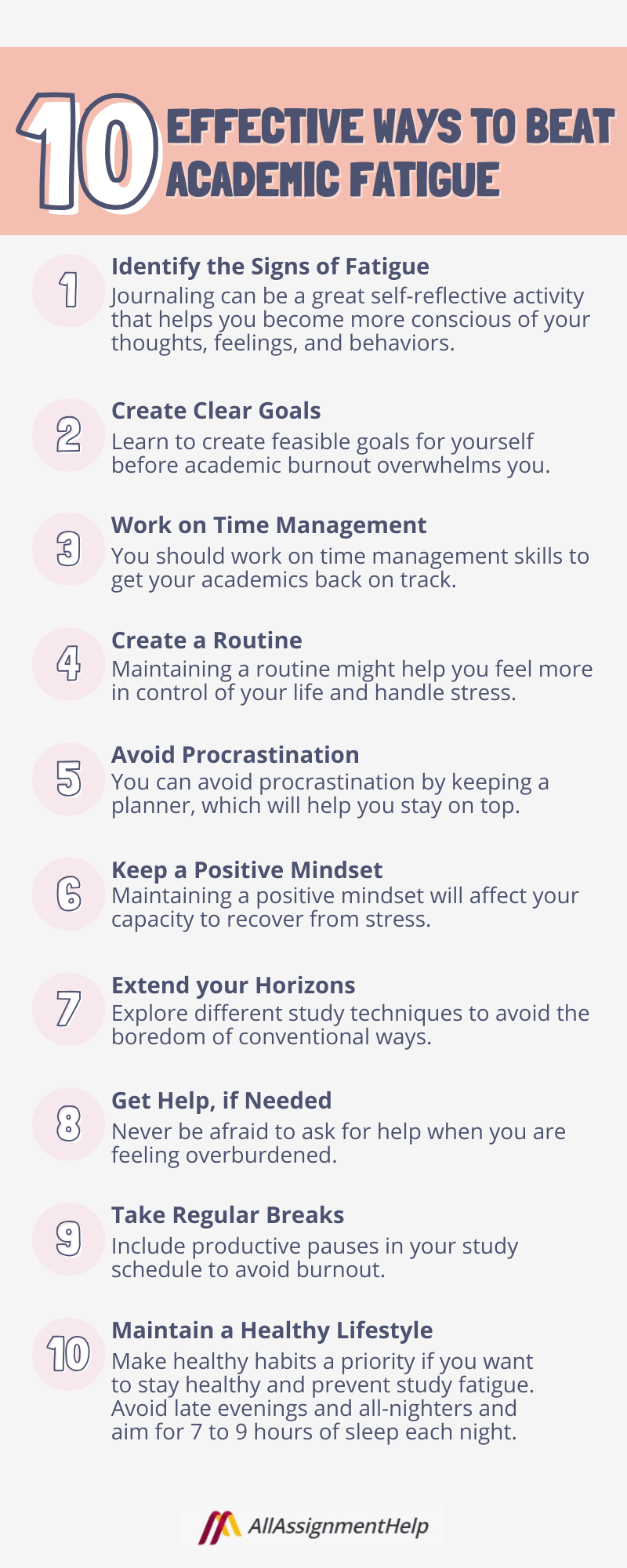
Now that you understand the main reasons for this common problem, it is necessary to understand how to handle academic fatigue. It’s vital to take care of yourself and follow these 10 suggestions to lower your risk of mental health problems:
Identify the Signs of Academic Fatigue
You have to learn to identify academic fatigue before you can deal with it. Journaling can be a great self-reflective activity that helps you become more conscious of your thoughts, feelings, and behaviors. It will also help you find out whether you are suffering from burnout or not. However, if you are a parent of a student, make sure you are aware of the above burnout signs and keep an eye out for them in your child.
Create Clear Goals
Learn to create feasible goals for yourself before academic burnout overwhelms you. Limit your daily goals if you are currently too busy with work, school, and other after-school activities. Furthermore, try dividing more complicated, bigger assignments into manageable portions when schoolwork becomes too much to handle. This will increase your self-confidence and provide you with the courage to proceed.
Work on Time Management
Feeling overburdened or lacking personal time are some of the factors that might lead to academic fatigue. However, with the right planning, you can start to resolve those problems. Hence, you should work on improving your time management skills to get your academics back on track. For example, if you are assigned math assignment problems that you need to submit within the next 3 days, you need to create a time timetable to complete them on time. Also, if you find yourself unable to solve the assignment on your own, you can take online math assignment help from experts who will help to complete the assignment on time. This will also save your time and take you out of the submission problem.
Create a Routine
Maintaining a routine each day might help you feel more in control of your life and handle stress. Studies have repeatedly shown the advantages of maintaining a daily routine that balances therapeutic and academic pursuits. A routine can help you be more effective in school, reduce stress, and enhance your health. Also, make time for just the things you truly like doing, whether it’s riding your skateboard or watching a nice movie.
Avoid Procrastination
Procrastination can occur when you don’t properly manage your time and are caught off guard the day before an assignment or exam. When you put things off, you can become more stressed, anxious, and eventually disappointed if things don’t work out as planned. Even if you may find this class necessary, you will be under more stress than you would be if you studied. Also, procrastination leads you to a last-minute rush. However, you can avoid procrastination by keeping a planner, which will help you stay on top of impending assignments and exams.
Keep a Positive Mindset
Maintaining a positive mindset could significantly affect your capacity to recover from stress. It is normal to face challenges and disappointments during your academic journey, but how you see and respond to them matters much. Put self-compassion into practice and face pessimistic ideas. Remember that failures are a necessary component of learning, and acknowledge and appreciate your accomplishments, no matter how minor. Moreover, having a positive outlook lowers stress and increases your ability to bounce back from academic setbacks as well.
Extend your Horizons
Routine and monotony can lead to fatigue. Hence, keeping your learning process active and interesting is important. Explore different study techniques to avoid the boredom of conventional ways. Think of group conversations, practical projects, interactive online courses, or cooperative research possibilities. Diversifying your education enables you to get a wider range of skills and viewpoints while maintaining your desire and interest. Try a variety of learning approaches to see which suits you best, then modify your strategy appropriately.
Get Help, if Needed
Never be afraid to ask for help when you’re feeling overburdened. Talk about your concerns with loved ones, friends, or academic advisers who can provide insight and support. You can also read about specific assignment help services such as biology assignment help, chemistry assignment help, English assignment help, etc, in case you get stuck while working on an assignment. It can be comforting and stress-relieving to connect with people who share your struggles.
Take Regular Breaks
Although it’s great that you’re committed to your academics, burnout might result from not taking frequent breaks. Your mental and physical reserves can be drained by overexertion and prolonged periods of intense concentration without enough rest. As a result, include productive pauses in your study schedule to avoid burnout. The Pomodoro technique is one popular approach, which involves studying for 25 minutes with concentration and then taking a 5-minute break. After four cycles are finished, take a lengthier 15–30 minute rest.
Maintain a Healthy Lifestyle
Make healthy habits a priority if you want to stay healthy and prevent study fatigue. Avoid late evenings and all-nighters and aim for 7 to 9 hours of sleep each night. Instead, stay away from junk food and eat well-balanced meals that include fruits, vegetables, whole grains, lean meats, and healthy fats. Avoid prolonged periods of restlessness and include regular exercise, aiming for 150 minutes of moderate-intensity activity each week. These habits lower stress, exhaustion, and the chance of sickness.
Academic fatigue is common among students taking online classes. Many often feel exhausted and struggle to concentrate during their online exam preparation. In such a situation, hiring an online exam helper could work as an additional assistance, which will help in performing well in the exam. All you need is to select a reliable online exam help website and ask, will you take my online exam for me? That’s All! You can then shift the burden of exam-related stress onto these services, allowing yourself a more relaxed and stress-free experience.
Also Read: How To Improve Communication Skills In Academic Settings
Conclusion
Now, you are familiar with academic fatigue, including its causes and prevention strategies. Stress is unavoidable at college, but you should try to control it and prevent it from making things worse by refusing to say no when you have too much on your plate. Prioritizing your health will help you excel academically.
FAQs
How to deal with study fatigue?
Research has indicated that students who take regular breaks are more productive. It provides a little break for your brain while keeping you inspired and providing you with something to look forward to. Take a walk, work on some projects, eat something, or simply relax and listen to music for a while.
What is mental fatigue?
Mental fatigue occurs when your brain becomes exhausted after prolonged periods of intense concentration and thought, such as studying or playing a demanding game. It might limit your ability to pay attention, make decisions, and avoid irrelevant information, as well as give you a sense that your mental energy is diminished.
How to overcome academic burnout?
Be attentive while you eat, breathe, and interact with others. Incorporate meditation breaks into your daily routine. Rearrange your timetable to improve the balance between work and life. Keep in mind that academic burnout can build over months or years, and recovery will require patience and dedication.