Robotics and Automation: Transforming Education, Careers, and the Future
What this article will help you understand
We are living in one of the most transformational times in human history. In 2026, robotics and automation are not a futuristic concept of science fiction movies. They are present in the factories, hospitals, classrooms, homes, online learning platforms, or even in our daily-use devices. From automated customer service chatbots to AI-powered tutoring systems in
What are you trying to do with this topic?
Choose the closest task and the page will point you towards a useful next step.
Start with the central concept and the terminology used in the article.
Open the closest route ↗Connect the explanation to the question, learning outcomes and marking criteria.
Open the closest route ↗Review evidence, structure, referencing and the exact submission requirements.
Open the closest route ↗Do you have enough information to begin?
Select what you already have. Nothing is submitted from this checklist.
When these details are together, the requirement can be reviewed in context.
Assignment Help USA ↗Table of Contents
We are living in one of the most transformational times in human history. In 2026, robotics and automation are not a futuristic concept of science fiction movies. They are present in the factories, hospitals, classrooms, homes, online learning platforms, or even in our daily-use devices. From automated customer service chatbots to AI-powered tutoring systems in online classes, robotics and automation are changing the way that students learn, work, and prepare for their careers.
For students, understanding robotics and automation is not just about learning new technology. It is also about staying relevant in a rapidly changing job market. Whether you plan to build a career in engineering, business, healthcare, or even the arts, automation will influence your future in one way or another.
However, as the saying goes, all that glitters is not gold. Not every student finds it easy to understand these changes in education. Many students feel confused when trying to keep up with new technologies and automated systems. Because of this, they often look for guidance and support to better understand automation and its role in modern learning.
This blog by AllAssignmentHelp will clear common doubts about robotics and automation in online education and help students become more aware of how these technologies are shaping the future of learning.
Let’s get started…
What Is Robotics?
Robotics is a field of technology which deals with the design, construction, and programming of robots. A robot is a machine that is able to perform tasks without significant human intervention.
Robots can:
- Assemble cars in factories
- Deliver packages
- Assist in warehouses
- Clean homes
- Make learning happen in classrooms
Modern robots combine:
- Mechanical Engineering
- UL Electronics Artificial Intelligence
- Sensors Machine learning
- Computer programming
Robotics is no longer limited to industrial settings. Today, it is used in education, healthcare, agriculture, space exploration, and even virtual classrooms. One of the most common examples can be seen in online learning platforms where chatbots are helping students every day.
Students can ask these chatbots subject-related questions whenever they need help. They are especially useful when students feel overwhelmed with assignments or coursework. In such situations, many students start wondering, Can I pay someone to take a college class for me? Chatbots and online academic support tools can guide them toward the right resources and help them manage their studies more effectively.
Also Read: Top Technology Research Topics for Students
What Is Automation?
Automation refers to the use of technology, machines, and software to perform tasks with minimal human involvement. In simple words, automation allows systems to complete repetitive or complex tasks automatically.
Instead of people doing the same work again and again, machines and computer programs can handle these processes faster and more accurately. This helps save time, reduce errors, and improve efficiency.
Automation is widely used in many industries today. For example:
- Manufacturing: Robots assemble products in factories.
- Healthcare: Automated systems help doctors analyze medical reports and patient data.
- Agriculture: Smart machines monitor crops and irrigation systems.
- Education: Online learning platforms use automated grading systems and chatbots to answer students’ questions.
In the context of online education, automation plays an important role. Many learning platforms use automated tools to track student progress, schedule assignments, and provide instant feedback on quizzes and tests.
Automation also helps students manage their studies better. When students feel overwhelmed with coursework or deadlines, they sometimes refer to assignment help sites, hoping that online academic support tools can guide them toward better learning resources and help them stay organized.
In simple terms, automation is transforming how people work, learn, and solve problems. For students, understanding automation is important because it is becoming a key part of modern education and future careers.
Also Read: What is Computer Technology? A Brief Overview
What is the Role of automation in Education?
Automation allows educational institutions and online learning platforms to deliver faster, more personalized, and more efficient education.
Here are some key ways automation plays a role in education:
- Automated email responses
- Self-checkout machines
- Smart home systems
- AI chat support
- Online exam grading systems
- Online class help sites
- Content recommendations (algorithm based)
In the area of education, the major role of automation includes:
- Online class scheduling
- Assignment submissions
- Digital grading systems
- Personalization of Learning (AI based)
What is the Difference Between Robotics And Automation?
While the two concepts are very much related, robotics and automation are not synonymous.
- Automation is focused on a process being performed in an automatic manner.
- Robotics deals with actual machines that do things and are physical.
- A chatbot that is deployed within an online course is an automation.
| Feature | Robotics | Automation |
| Definition | Technology focused on building and using robots | Technology focused on automating processes |
| Physical Machine | Usually involves a physical robot | May or may not involve machines |
| Function | Performs physical tasks | Performs tasks automatically |
| Examples | Industrial robots, surgical robots | Chatbots, automated workflows, smart systems |
| Complexity | Often more complex with sensors and movement | Can be simple rule-based systems |
Together, they form the backbone of technological advancement in modern times. Students pursuing their academic journey online, especially in computer science, get the opportunity to learn these technologies in a deeper way rather than just understanding their applications that most people experience. Working with these technologies often involves intense programming activities. This is where many students seek Java assignment help or programming language assignment help to better understand complex coding tasks and complete their coursework successfully.
How Robotics and Automation are Changing Education?
The impact upon education is massive, and here is how:
AI-Powered Online Learning
Modern online learning platforms rely on AI algorithms to:
- Personalize lessons
- Track performance
- Suggest practice problems
- Identify weak areas
Students sitting in online classes now have the experience of dealing with adaptive learning systems that change the difficulty according to performance.
Smart Classrooms and Virtual Laboratory
In many institutions, robotics labs give students the practical opportunity to:
- Program robotic arms
- Build automated vehicles
- Test AI-driven systems
Even students living in remote locations can now learn robotics through online courses and virtual simulations. Digital education has made robotics learning accessible beyond elite institutions and brought it closer to students everywhere.
Assessment Systems that are Automated
Automation allows:
- Instant grading of quizzes
- AI based plagiarism check
- Smart feedback generation
This helps the students to obtain quicker results in online classes and helps in enhancing academic efficiency.
Robotics and Automation Job Market
One of the biggest fears students have today is: Will robots take our jobs? The answer is not simply yes or no. While automation may replace some repetitive roles, it is also creating many new career opportunities.
Jobs Likely to Be Automated:
- Data entry
- Basic accounting tasks
- Routine manufacturing jobs
- Telemarketing
- Assembly line work
Jobs that are being Displaced by Automation:
- Robotics engineers
- AI developers
- Automation specialists
- Cybersecurity experts
- Data analysts
- Machine learning engineers
Instead of fearing automation, students should focus on adapting to it. The future job market will reward people who understand technology and can work alongside intelligent machines. By learning skills such as programming, data analysis, robotics, AI and seeking information technology assignment help, students can prepare themselves for careers that are not only secure but also highly innovative. Automation is not just replacing jobs; it is reshaping the workforce and opening doors to new opportunities for those who are ready to learn and evolve.
Why Students Need to Learn about Robotics and Automation?
Robotics and automation are rapidly transforming the way industries work. From healthcare and manufacturing to education and transportation, intelligent machines are becoming a part of everyday life. Because of this shift, it has become important for students to understand how these technologies work.
Future-Proofing Careers
Industries that are meeting automation include:
- Healthcare Banking Retail Logistics Agriculture Education
- Understanding robotics makes students flexible
Expanding the Dimensions of Careers
Students can work in occupations such as:
- Robotics engineering
- Industrial automation
- AI research
- Mechatronics
- Software development
- Embedded systems design
Many of these skills can now be learned through online courses and online degree programs.
Entrepreneurial Opportunities
Automation tools make it possible for students to:
- Build AI startups
- Create smart devices
Role Online Learning Plays in Robotics Education
One of the greatest benefits in the year 2026 is accessibility. Students no longer need to spend on expensive institutes to learn robotics. Via online classes, students are able to:
- Learn Python programming
- Study machine learning
- Understand robotics design
- Access simulation tools
Online learning platforms provide:
- Beginner robotics courses
- Specializations of AI and automation
- Project-based learning
What are the Ethical Issues Surrounding Automation?
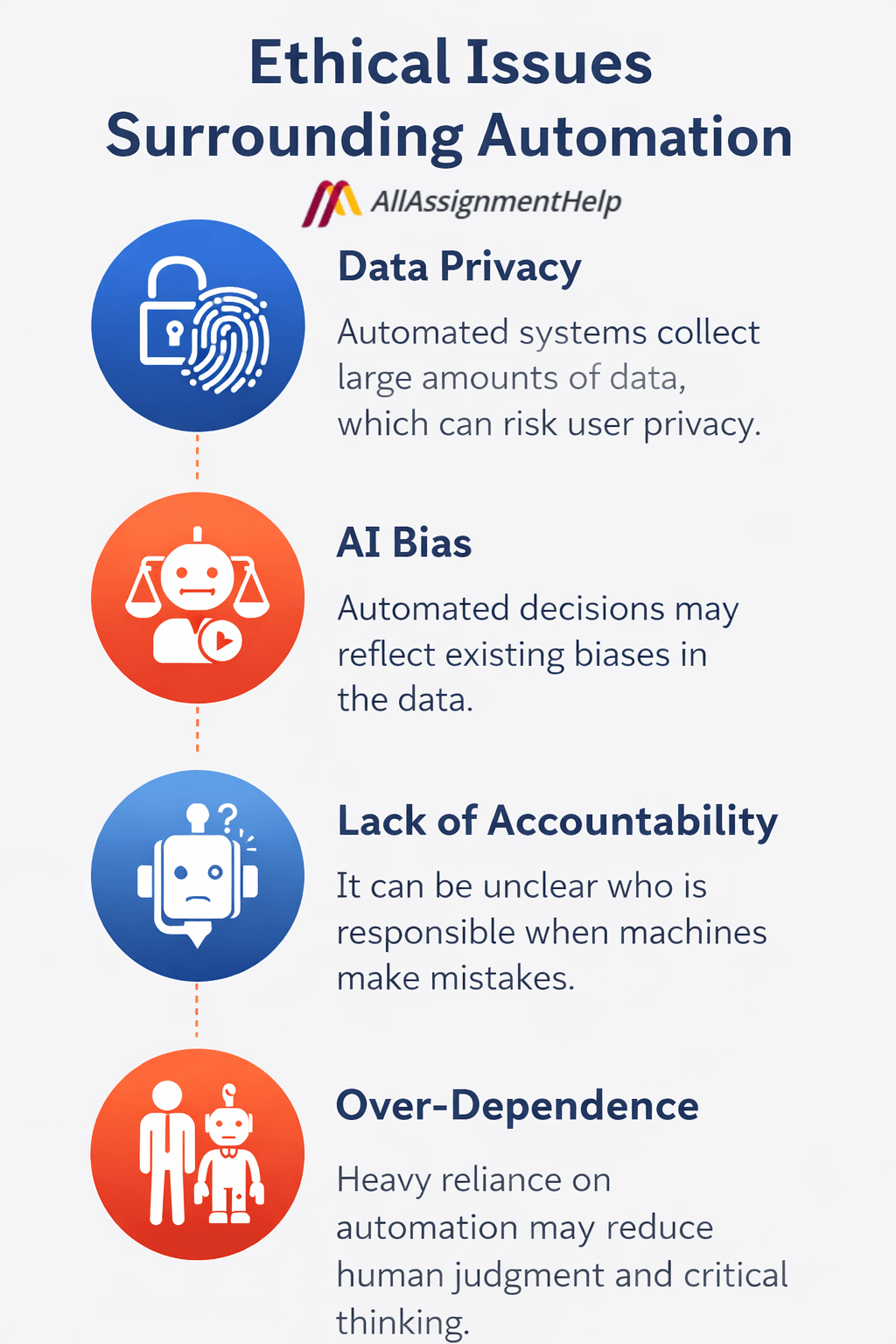
Despite many benefits, there are some serious ethical questions concerning automation. Here are the following:
Data Privacy
Automated systems acquire massive data. Maintaining the secrecy of digital privacy is often a challenging and daunting task.
AI Bias
Automated decision systems can perpetually reflect bias. Students learning robotics need to have knowledge of ethical accountability as well as technical knowledge.
Lack of Human Accountability
When machines make decisions, it can be difficult to determine who is responsible when something goes wrong.
For instance:
- If a self-driving car causes an accident, who is responsible?
- If an automated medical system makes an incorrect diagnosis, who is accountable?
There must be clear responsibility and regulation to ensure that automated systems do not operate without accountability.
Over-Dependence on Technology
As automation increases, humans may become too dependent on machines. This could reduce human skills and decision-making abilities.
For example:
- Pilots relying too heavily on automated flight systems
- Doctors depending entirely on diagnostic software
- Students relying only on AI tools for learning
Technology should assist humans, not completely replace human judgment and skills.
Also Read: Computer Science vs Information Technology
How to Begin Learning Robotics as a Student?
Here are some simple steps students can follow to start learning robotics:
Step 1: Learn Programming
Programming is the foundation of robotics. Languages such as Python, C++, and Java are commonly used. Many online courses teach these programming skills step by step, making it easier for beginners to start.
Step 2: Learn the Basics of Electronics
Understanding basic electronics is important for robotics. Students should learn about sensors, circuits, and microcontrollers. Beginner robotics kits can help students practice and understand these concepts more easily.
Step 3: Enroll in Specialized Online Classes
Students can enroll in structured robotics programs offered by reputable e-learning platforms. Look for courses that provide certification, hands-on projects, and an industry-recognized curriculum.
Step 4: Build Practical Projects
Working on projects helps students apply what they learn. Some beginner-friendly robotics projects include:
- Line-following robot
- Smart home automation system
- AI chatbot
- Drone programming
Building projects also helps students strengthen their resumes and develop practical skills, which are valuable for future careers in robotics and automation.
How to Balance Studies of Robotics With Other Subjects
Students who take on the field of robotics are frequently juggling:
- College subjects
- Online classes
- Internships
Working simultaneously with other degrees can be daunting and exhausting for students, especially when exam or assignment deadlines clash. Students going through such situations often struggle to balance everything without affecting their performance. In such cases, connecting with online class help services and saying, please take my online exam for me? Can sometimes feel like a convenient option to manage academic pressure and demanding schedules. Seeking external support should not be seen as a sign of weakness. Instead, it can be a smart way to manage your learning journey smoothly and conveniently, especially when you are trying to upskill yourself in multiple areas to meet the evolving demands of today’s competitive marketplace.
Last Thoughts!
By 2030 and beyond, we can expect major changes in the world. There could be fully automated warehouses, AI-driven medical diagnosis, self-driving transportation, smart cities, and robotic agriculture. Technologies such as intelligent tutoring systems will also continue to transform education. Students who develop knowledge about robotics and automation today will be the ones driving these innovations in the future. As technology continues to evolve, it is important for students to prepare themselves and stay ready for the opportunities that lie ahead.
FAQs
1. What is the difference between robotics and automation?
Robotics involves physical machines that perform tasks, while automation refers to software or systems that complete tasks automatically, such as AI chatbots or automated grading.
2. How are robotics and automation changing education?
They make learning more personalized through AI tools, virtual labs, automated feedback, and smart learning platforms.
3. Do students need programming to learn robotics?
Yes. Programming languages like Python, C++, and Java help students control robots and build automated systems.
4. Can students learn robotics online?
Yes. Many online courses offer robotics lessons, coding tutorials, and hands-on projects that students can learn from anywhere.
5. Why should students learn about automation?
Automation is shaping many industries, and understanding it helps students prepare for future careers.
Connect the explanation to the work your course actually requires
Use this guide beside the exact brief, course material and marking criteria for Robotics and Automation.
- Read the complete brief.
- Identify the expected academic output.
- Follow the marking criteria and source rules.
- Check the final structure and referencing.
Sonaden Scott
Psychology · 4.9/5
The subject signals in this article point toward Psychology. Sonaden Scott is shown as one available profile in that area.
Sonaden’s profile focuses on psychology research papers, psychometric testing and clinically informed reasoning. Master’s in Psychology, University of Queensland
View established tutor profile ↗Relevant subject areas
- Psychometric Testing
- Health Psychology
- Psychology Research Papers
- Cognitive Science
- Quantitative Research
Find another explanation across the complete blog
This search uses WordPress itself, so it can reach articles beyond the 20 shown on the dashboard.
Connect Robotics and Automation to the task in front of you
Keep the brief, marking criteria, required evidence and submission format visible while you work.