Table of Contents
The healthcare industry in the United States is growing faster than ever, and with this growth comes a strong demand for skilled frontline professionals. One of the most reliable and rewarding entry points into healthcare is through CNA Programs. In 2026, Certified Nurse Assistant roles are more relevant than ever, especially with an ageing population, expanding healthcare facilities, and a continued focus on patient-centred care.
For students in the USA who want a quick, affordable, and meaningful career in healthcare, CNA Programs offer a clear path. They are shorter than nursing degrees, cost less, and provide hands-on experience that leads directly to employment. Whether your long-term goal is to become a registered nurse, work in hospitals, or gain stable employment quickly, enrolling in the right CNA Program can set the foundation for your future.
This detailed guide by All Assignment Help covers everything you need to know, from what a CNA Program is, to the benefits of becoming a CNA, and finally, the top CNA Programs to consider in 2026 for USA students.
Exam Pressure Stealing Your Sleep?
Let a trusted expert take your online exam securely while you relax and focus on what matters most.
Get Expert Exam Help NowWhat Is a CNA Program?
A Certified Nurse Assistant (CNA) Program is a state-approved training course designed to prepare students for entry-level roles in healthcare. CNAs work closely with patients and support registered nurses (RNs) and licensed practical nurses (LPNs).
These programs focus on both classroom learning and clinical training. Students learn essential patient care skills and then practice them in real healthcare settings under supervision.
Core Areas Covered in CNA Programs
Most CNA Programs in the USA include training in:
- Basic nursing skills
- Patient hygiene and grooming
- Measuring vital signs
- Feeding and mobility assistance
- Infection control and safety procedures
- Patient communication and emotional support
- Ethical and legal responsibilities in healthcare
After completing the program, students must pass a state competency exam to become certified and eligible for employment. Students enrolled in CNA programs need to manage several tasks and activities throughout the course. During the academic session, it is advised to seek professional nursing assignment help when overwhelmed with academic responsibilities.
Why CNA Programs Are in High Demand in 2026
The demand for CNA Programs has surged in recent years and continues to rise in 2026 due to several factors:
- An ageing population requiring long-term care
- Increased need for home healthcare services
- Expansion of hospitals, clinics, and assisted living facilities
- Growing interest among students for short-term healthcare courses
Healthcare employers value CNAs because they play a critical role in daily patient care. As a result, students who complete recognised CNA Programs often find jobs quickly after certification.
Benefits of Doing CNA Programs
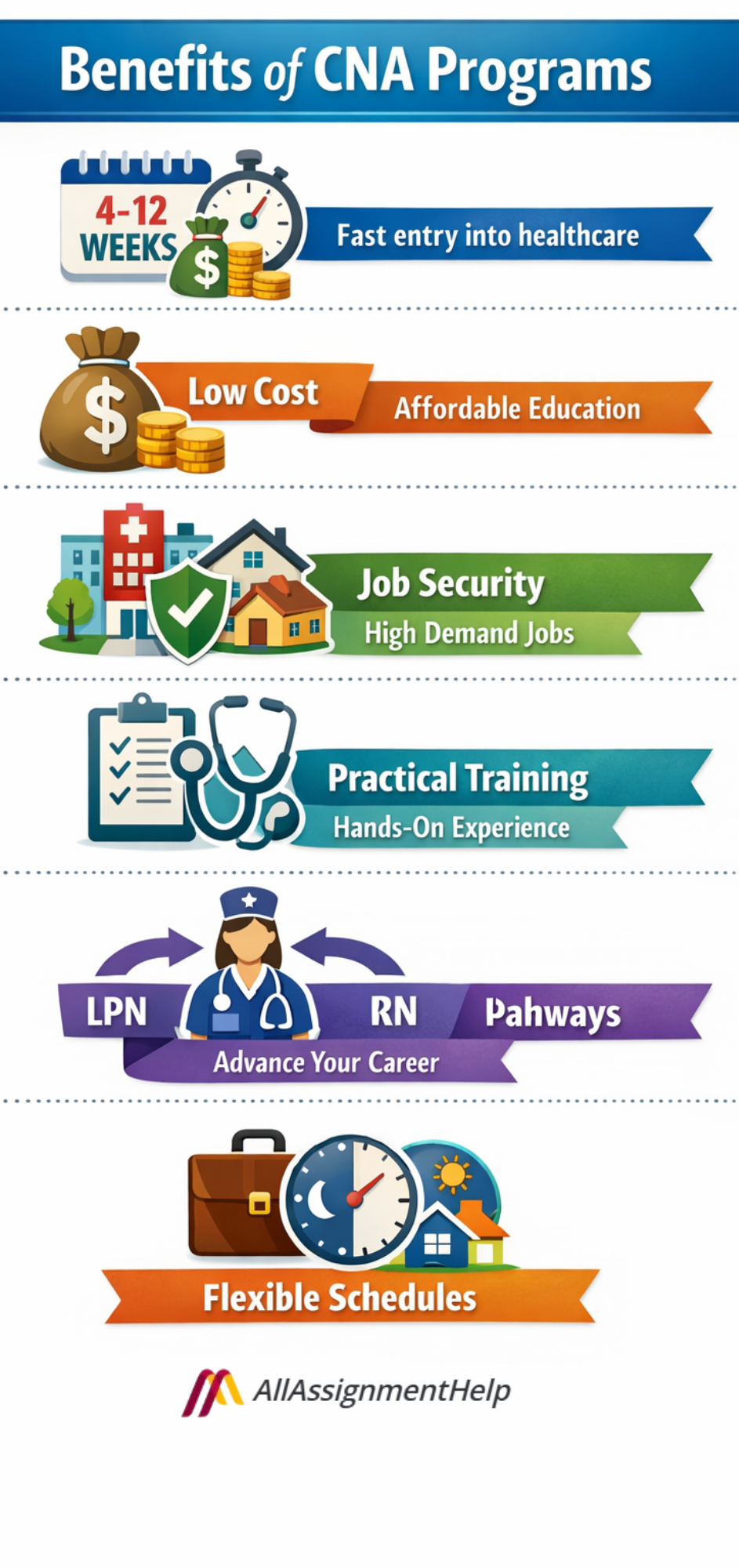
Choosing from the many CNA Programs available in 2026 comes with several practical and career-focused benefits.
1. Short Duration and Quick Entry into Healthcare
Most CNA Programs can be completed within 4 to 12 weeks. This makes them ideal for students who want to start working quickly without spending years in college.
2. Affordable Education
Compared to nursing degrees, CNA Programs are budget-friendly. Many programs also offer payment plans, scholarships, or employer-sponsored training.
3. Strong Job Stability
Healthcare is a recession-resistant industry. Certified Nurse Assistants are always in demand, especially in hospitals, nursing homes, and home healthcare agencies.
4. Hands-On Clinical Experience
CNA Programs emphasize real-world training. This practical exposure builds confidence and prepares students for daily responsibilities from day one.
5. Career Growth Opportunities
Many students use CNA Programs as a stepping stone to become:
- Licensed Practical Nurses (LPNs)
- Registered Nurses (RNs)
- Healthcare administrators
- Specialized caregivers
6. Flexible Work Options
CNAs can work:
- Full-time or part-time
- Day or night shifts
- In hospitals, long-term care facilities, or private homes
This flexibility is quite helpful for students balancing work, family, or further studies. Students also have the option to enroll in online CNA courses offered by reputable learning platforms available in their region. These online courses are a best fit for those who are full-time students or working part-time or full-time jobs.
Students are increasingly inclined toward online courses because they are easy to pursue and often provide better job opportunities. One of the biggest advantages is that students can get expert help with their online courses whenever they need it. With just a simple search, Can someone take my online nursing class for me?, they can hire professional experts for their academic support.
Who Should Enroll in CNA Programs?
CNA Programs are suitable for:
- High school graduates interested in healthcare
- Career changers looking for stable employment
- Nursing students seeking early clinical experience
- Individuals passionate about patient care and service
If you enjoy helping people, working in a team, and making a real difference in daily lives, CNA Programs are a great fit.
Key Skills You Gain from CNA Programs
By the end of CNA Programs, students develop both technical and soft skills, including:
- Patient handling and mobility assistance
- Effective communication with patients and families
- Time management in fast-paced environments
- Emotional intelligence and empathy
- Attention to detail and safety awareness
These skills are valuable not only for CNA roles but also for long-term careers in healthcare.
Top CNA Programs to Consider in 2026 for USA Students
With many CNA Programs available across the USA, choosing the right one is essential. Below are the top types of CNA Programs students should consider in 2026.
1. State-Approved Community College CNA Programs
Community colleges remain one of the most trusted options for CNA Programs.
Why choose them:
- Affordable tuition
- High-quality instruction
- Access to labs and clinical facilities
- Strong reputation with employers
These CNA Programs often follow strict state guidelines and prepare students well for certification exams.
2. Hospital-Based CNA Programs
Some hospitals offer in-house CNA to train future employees.
Key advantages:
- Direct clinical exposure
- Training aligned with hospital standards
- High chances of job placement after completion
In many cases, hospitals may reduce or waive tuition if students agree to work with them for a certain period.
3. Online CNA Programs with Clinical Training
In 2026, hybrid learning has become more advanced. Many CNA Program now offer online theory classes combined with in-person clinical training.
Best for:
- Working students
- Parents or caregivers
- Students in remote areas
These CNA provide flexibility while still meeting state certification requirements.
4. Accelerated CNA Programs
For students who want to enter the workforce quickly, accelerated CNA are ideal.
Features include:
- Shorter completion time
- Intensive schedules
- Focused practical training
These programs require commitment but can fast-track your healthcare career.
5. Employer-Sponsored CNA Programs
Many nursing homes and long-term care facilities offer free or paid CNA Programs.
Benefits include:
- Little to no tuition cost
- Guaranteed employment after certification
- Real-world training environment
These CNA Program are excellent for students who want immediate job security.
6. Red Cross CNA Training Programs
Well-structured and widely recognized, these CNA focus heavily on patient safety, ethics, and hands-on skills.
They are especially valued by employers in hospitals and care facilities due to their standardized training approach.
How to Choose the Right CNA Program in 2026
When comparing CNA, consider the following factors:
- State approval and certification eligibility
- Program duration and schedule
- Clinical training hours
- Exam pass rates
- Job placement support
- Total cost and financial aid options
Choosing a well-recognized CNA program can significantly improve your employment prospects. To successfully complete your CNA, you can also consider opting for online class help to gain better knowledge, improve your understanding of key concepts, and maintain a strong grade point average.
CNA Certification Process in the USA
After completing CNA Program, students must:
- Apply for the state competency exam
- Pass the written (or oral) test
- Pass the skills evaluation
Once certified, CNAs are listed on the state nurse aide registry and can legally work in healthcare facilities.
Career Opportunities After CNA Programs
Graduates of CNA Program can work in:
- Hospitals
- Nursing homes
- Assisted living facilities
- Rehabilitation centers
- Home healthcare agencies
With experience, CNAs can move into supervisory roles or continue education toward nursing degrees.
Salary Outlook for CNA Graduates in 2026
In 2026, CNA salaries in the USA remain competitive, especially for experienced professionals.
Factors affecting salary include:
- Location and state regulations
- Type of healthcare facility
- Shift timings (night shifts often pay more)
- Additional certifications or experience
Many CNAs also receive benefits like healthcare coverage, overtime pay, and career advancement support.
Challenges of CNA Programs (and How to Overcome Them)
Like any healthcare role, CNA come with challenges:
- Physically demanding work
- Emotional involvement with patients
- Long or irregular shifts
However, proper training, time management, and choosing the right workplace can make the experience rewarding and sustainable.
Why 2026 Is the Right Time to Enrol in CNA Programs
Healthcare needs are increasing nationwide, and CNA are adapting with better training methods, flexible schedules, and stronger career support. For USA students, 2026 offers more opportunities than ever to enter healthcare through CNA Programs.
Final Thoughts
CNA Program are one of the most practical and reliable ways to begin a healthcare career in the USA. They offer fast training, strong job demand, and meaningful work that directly impacts patients’ lives. Whether you plan to grow into nursing or prefer long-term patient care roles, enrolling in the right CNA in 2026 can open doors to stability, growth, and purpose.
For students looking for affordable education, quick employment, and hands-on healthcare experience, CNA remain a top choice in 2026.
FAQs
1. How long do CNA Program usually take to complete?
Most CNA Programs in the USA take between 4 to 12 weeks, depending on whether the course is full-time, part-time, or accelerated. Some programs may take slightly longer if they include extended clinical training.
2. Are CNA Programs hard for beginners?
CNA are designed for beginners with no medical background. The coursework is simple, practical, and focused on patient care. As long as students attend classes regularly and practice skills, the program is very manageable.
3. Can I join CNA after high school?
Yes, most CNA Program accept students who have completed high school or have a GED. Some programs may also require basic health screenings and background checks before enrollment.
4. Do CNA guarantee a job after completion?
While CNA do not officially guarantee jobs, many graduates find employment quickly. Hospital-based and employer-sponsored CNA Programs often offer direct job placement after certification.
5. Can CNA help me become a nurse in the future?
Absolutely. Many students use CNA as a first step toward becoming an LPN or RN. The hands-on experience gained as a CNA makes nursing school easier and strengthens future healthcare career opportunities.