
Table of Contents
Online education has evolved rapidly, and in 2026, it is no longer just an alternative to traditional learning. It is a primary mode of education for millions of students worldwide. From university degrees to professional certifications, online courses now shape academic and career success.
However, flexibility comes with responsibility. Without classrooms, fixed schedules, or face-to-face supervision, many students struggle to stay productive. Distractions, poor time management, and mental fatigue often lead to stress and missed deadlines.
This detailed guide by AllAssignmentHelp, explains how to stay productive in online courses, improve focus, and maintain strong academic performance throughout the year.
Physics formulas piling up? Deadlines getting closer? Grades don’t have to suffer.
If complex equations, weekly quizzes, labs, and exams are draining your time and focus, let certified experts step in and handle your entire online physics class— accurately, confidentially, and on time.
🚀 Take My Online Physics Class For Me✔ 100% Confidential | ✔ Expert Physics Tutors | ✔ Deadline-Driven Results
Productivity in Online Learning Courses
Productivity in online education does not mean studying all day. It means using your time efficiently to achieve learning goals without burnout. Productive students complete tasks on time, understand concepts clearly, and still have space for personal life.
Online courses demand:
- Self-discipline
- Consistent effort
- Smart planning
- Emotional balance
Without these supports, even capable students can fall behind and begin considering external help, often thinking about how to pay someone to take my online class for me to ease academic pressure.
Tips to Become Productive in Online Courses
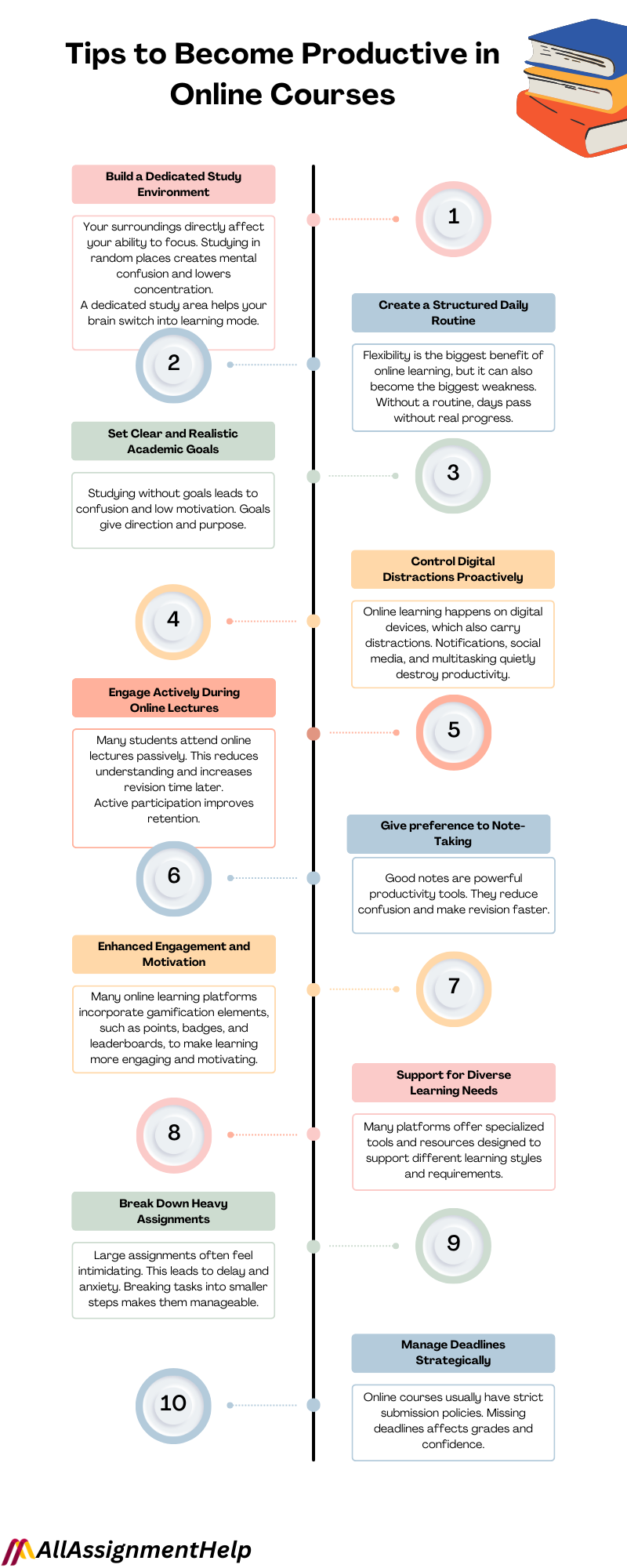
Online learning offers flexibility, but productivity does not happen automatically. Without the right habits, even motivated students can struggle to stay consistent.
The key is to create systems that support focus, time management, and accountability. When your environment and routine work together, learning becomes more manageable and less stressful.
Build a Dedicated Study Environment
Your surroundings directly affect your ability to focus. Studying in random places creates mental confusion and lowers concentration.
A dedicated study area helps your brain switch into learning mode.
How to create an effective study setup:
- Choose a quiet and well-lit space
- Use a desk instead of a bed
- Keep notebooks, laptop, and stationery organized
- Remove unrelated items
A stable environment improves attention span and reduces procrastination.
Create a Structured Daily Routine
Flexibility is the biggest benefit of online learning, but it can also become the biggest weakness. Without a routine, days pass without real progress.
A fixed schedule creates discipline and consistency.
Steps to build a productive routine:
- Decide your peak focus hours
- Study at the same time daily
- Assign time slots for lectures, assignments, and revision
- Include breaks to avoid fatigue
Students often feel overwhelmed when they miss classes or fall behind, especially in courses like statistics or accounting. In such moments, some begin searching online, Can someone take my online statistics class for me? or Can I pay someone to take my accounting class for me?” not because they lack ability, but because structure and support are missing.
Set Clear and Realistic Academic Goals
Studying without goals leads to confusion and low motivation. Goals give direction and purpose.
Break goals into levels:
- Daily goals (watch lectures, take notes)
- Weekly goals (finish assignments, revise topics)
- Monthly goals (exam preparation, project completion)
Clear goals reduce stress and make learning measurable. However, it is also important to consider factors that may hinder your planning, such as unexpected situations or sudden mishaps. To deal with these challenges, do not hesitate to seek online assignment help for your online courses, as it can help you stay on track and manage your workload effectively.
Control Digital Distractions Proactively
Online learning happens on digital devices, which also carry distractions. Notifications, social media, and multitasking quietly destroy productivity.
Ways to minimize distractions:
- Silence non-essential notifications
- Use focus modes or blockers
- Keep phone away during study hours
- Study in time blocks
When distractions pile up, tasks get delayed. This pressure sometimes pushes students to think about alternatives, such as asking experts, Can I pay someone to do my online exam for me?especially during exam weeks or when deadlines are tight.
Engage Actively During Online Lectures
Many students attend online lectures passively. This reduces understanding and increases revision time later.
Active participation improves retention.
How to stay engaged:
- Take handwritten or digital notes
- Pause and replay complex parts
- Write questions during lectures
- Summarize topics in your own words
Active learning saves hours during exam preparation.
Give preference to Note-Taking
Good notes are powerful productivity tools. They reduce confusion and make revision faster.
Effective note-taking practices:
- Focus on key points
- Use headings and bullet points
- Highlight definitions and formulas
- Review notes within 24 hours
Well-organized notes reduce dependency on repeated lectures.
Break Down Heavy Assignments
Large assignments often feel intimidating. This leads to delay and anxiety. Breaking tasks into smaller steps makes them manageable.
Example approach:
- Understand requirements
- Collect research material
- Create an outline
- Write sections one by one
- Edit and proofread
Small wins keep motivation high and reduce last-minute stress.
Manage Deadlines Strategically
Online courses usually have strict submission policies. Missing deadlines affects grades and confidence.
Smart deadline management tips:
- Use a digital calendar
- Set reminders before due dates
- Start assignments early
- Submit at least a day before
Students balancing jobs, family responsibilities, or multiple challenging subjects such as math or physics often feel stuck. In such cases, structured online class help services support students by addressing queries such as, Can someone take my online math class for me? while helping manage workload pressure and ensuring academic continuity.
Use Technology to Boost Productivity
Technology can either help or distract. Use it wisely.
Useful tools include:
- Task management apps
- Digital planners
- Cloud storage for notes
- Calendar alerts
Limit tools to essentials. Too many apps reduce efficiency.
Maintain Physical and Mental Well-Being
Productivity drops sharply when health is ignored. Long screen hours and stress harm performance.
Healthy habits that improve productivity:
- Proper sleep schedule
- Balanced meals
- Short movement breaks
- Eye and posture care
A healthy routine improves focus, memory, and motivation.
Seek Support Without Guilt
Struggling does not mean failure. Online learning can be demanding, especially during exams or project deadlines.
You can seek help by:
- Asking instructors for clarification
- Participating in discussion boards
- Collaborating with peers
- Using academic assistance platforms
When used responsibly, online class help services guide students through complex workloads, helping them stay productive without sacrificing learning outcomes.
Long-Term Benefits of Staying Productive
Consistent productivity leads to:
- Better grades
- Reduced anxiety
- Stronger learning habits
- Improved time management skills
- Career readiness
These skills extend beyond academics and benefit professional life as well.
Conclusion
Online learning in 2026 rewards discipline, planning, and consistency. Productivity is not about studying endlessly. It is about studying effectively.
By creating a structured routine, managing distractions, setting clear goals, and maintaining health, students can thrive in online courses. When responsibilities pile up, guided academic support can help students stay balanced and focused.
With the right strategies, online education becomes an opportunity, not a burden.
FAQs
1. How can I stay productive in online courses long term?
Follow a fixed routine, set goals, and review progress weekly.
2. Why do students lose focus in online classes?
Digital distractions and lack of structure are common reasons.
3. How many hours should I study daily for online learning?
Focused study of 3–5 hours daily is effective for most students.
4. Is multitasking good for online learning?
No. Multitasking reduces comprehension and increases mistakes.
5. How do I manage online assignments efficiently?
Start early, break tasks into steps, and track deadlines.
6. What should I do if online coursework feels overwhelming?
Seek guidance early instead of waiting until deadlines approach.
7. Can academic help services improve productivity?
Yes, when used responsibly, they reduce workload pressure and help students stay organized.
{ “@context”: “https://schema.org”, “@type”: “FAQPage”, “mainEntity”: [ { “@type”: “Question”, “name”: “How can I stay productive in online courses long term?”, “acceptedAnswer”: { “@type”: “Answer”, “text”: “Following a fixed daily routine, setting realistic goals, and reviewing progress weekly can help students stay productive in online courses over the long term.” } }, { “@type”: “Question”, “name”: “Why do students lose focus in online classes?”, “acceptedAnswer”: { “@type”: “Answer”, “text”: “Students often lose focus in online classes due to digital distractions, lack of structured schedules, and minimal face-to-face accountability.” } }, { “@type”: “Question”, “name”: “How many hours should I study daily for online learning?”, “acceptedAnswer”: { “@type”: “Answer”, “text”: “For most students, focused study sessions of 3 to 5 hours per day are effective for managing online learning without burnout.” } }, { “@type”: “Question”, “name”: “Is multitasking good for online learning?”, “acceptedAnswer”: { “@type”: “Answer”, “text”: “No, multitasking is not effective for online learning as it reduces comprehension, increases errors, and lowers overall productivity.” } }, { “@type”: “Question”, “name”: “How do I manage online assignments efficiently?”, “acceptedAnswer”: { “@type”: “Answer”, “text”: “Managing online assignments efficiently involves starting early, breaking tasks into smaller steps, and tracking deadlines using planners or digital tools.” } }, { “@type”: “Question”, “name”: “What should I do if online coursework feels overwhelming?”, “acceptedAnswer”: { “@type”: “Answer”, “text”: “If online coursework feels overwhelming, it is best to seek guidance early, communicate with instructors, and avoid waiting until deadlines are near.” } }, { “@type”: “Question”, “name”: “Can academic help services improve productivity?”, “acceptedAnswer”: { “@type”: “Answer”, “text”: “Yes, when used responsibly, academic help services can reduce workload pressure, improve time management, and help students stay organized.” } } ] }