Robotics vs AI: Which Is Best for Students in 2026?
What this article will help you understand
Technology is evolving rapidly, and students in 2026 are more interested than ever in future-focused careers. Among the most popular choices today are Robotics and Artificial Intelligence (AI). Both industries are growing fast, offering exciting career opportunities, attractive salaries, and global demand. However, many students still struggle with one important question: robotics vs AI, which
What are you trying to do with this topic?
Choose the closest task and the page will point you towards a useful next step.
Start with the central concept and the terminology used in the article.
Open the closest route ↗Connect the explanation to the question, learning outcomes and marking criteria.
Open the closest route ↗Review evidence, structure, referencing and the exact submission requirements.
Open the closest route ↗Do you have enough information to begin?
Select what you already have. Nothing is submitted from this checklist.
When these details are together, the requirement can be reviewed in context.
Assignment Help USA ↗Table of Contents
Technology is evolving rapidly, and students in 2026 are more interested than ever in future-focused careers. Among the most popular choices today are Robotics and Artificial Intelligence (AI). Both industries are growing fast, offering exciting career opportunities, attractive salaries, and global demand. However, many students still struggle with one important question: robotics vs AI, which is the better option in 2026?
The answer depends on your interests, skills, career goals, and learning style. Some students enjoy coding, data analysis, and software development, while others prefer machines, electronics, and practical engineering projects. Both fields are powerful, but they are different in many ways.
This detailed guide by AllAssignmentHelp explains everything students need to know about robotics and AI, including career scope, salary estimates, required skills, difficulty level, future demand, and which field may offer better opportunities in the coming years.
What Is Artificial Intelligence (AI)?
Artificial Intelligence refers to computer systems designed to perform tasks that normally require human intelligence. AI systems can learn from data, recognize patterns, solve problems, and make decisions automatically.
AI technologies are now used in almost every industry.
Common AI applications include:
- Chatbots and virtual assistants
- Self-driving vehicles
- AI-generated content tools
- Healthcare diagnosis systems
- Fraud detection software
- Recommendation systems
- Smart search engines
AI mainly focuses on software, algorithms, machine learning, and data processing. Students with strong programming skills usually find it easier to learn and work with AI. However, those who struggle with coding and technical concepts may face difficulties understanding complex AI topics. In such situations, seeking programming assignment help can support students in improving their coding knowledge and completing challenging tasks more effectively.
Also Read: Artificial Intelligence & Machine Learning
What Is Robotics?
Robotics is the field of designing, building, and operating robots. Robots are machines programmed to perform tasks automatically or semi-automatically.
Robotics combines several technical areas, including:
- Mechanical engineering
- Electronics
- Programming
- Automation
- Sensor technology
- Embedded systems
Robotics is commonly used in industries such as:
- Manufacturing
- Healthcare
- Logistics
- Agriculture
- Space research
- Defense
- Warehouse automation
Modern robots often use AI to improve decision-making and automation capabilities.
Also Read: Why Robotics is Becoming a Popular Subject in U.S. Schools
Robotics vs AI: What Is the Main Difference?
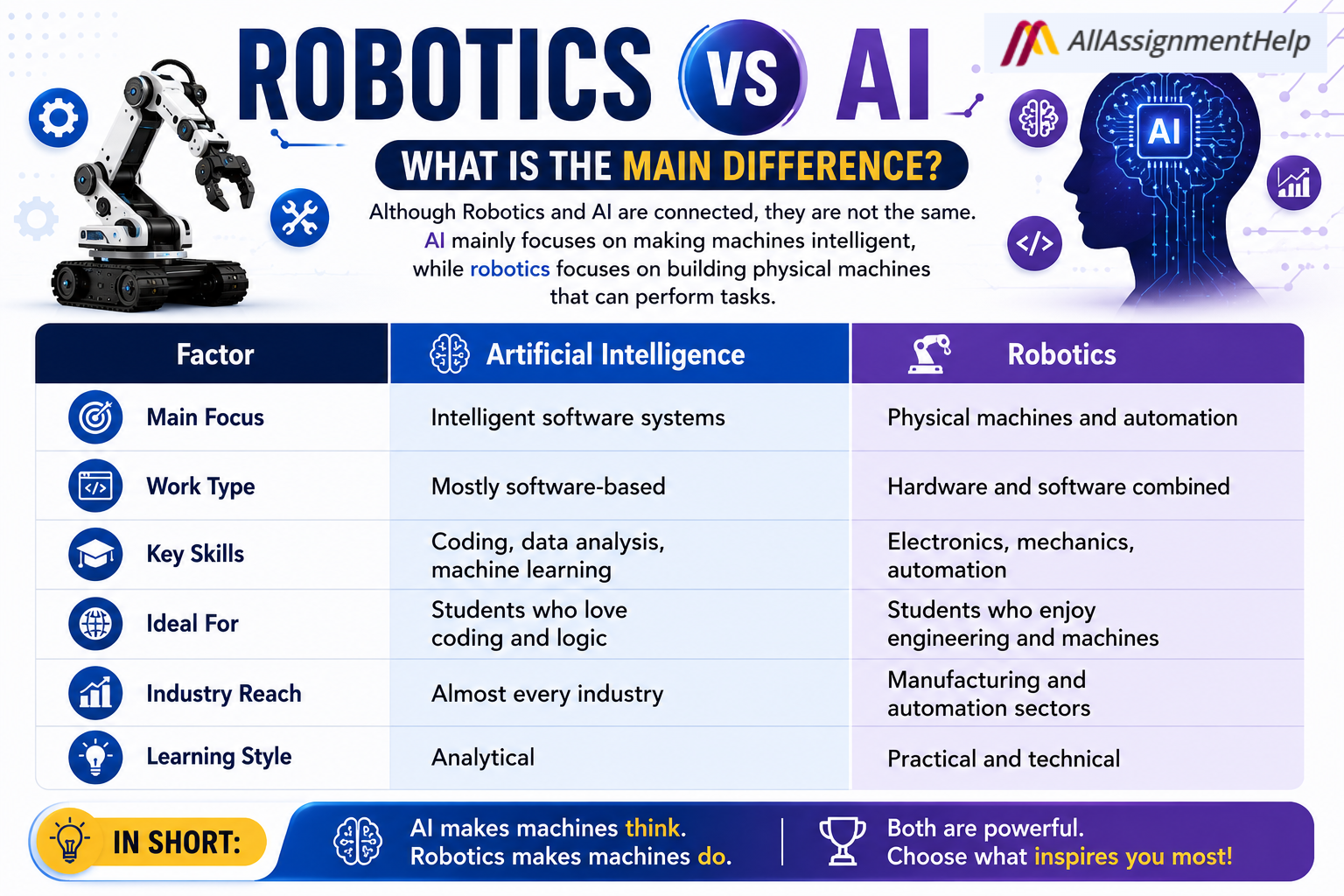
Although Robotics and AI are connected, they are not the same. AI mainly focuses on making machines intelligent, while robotics focuses on building physical machines that can perform tasks.
Why Is AI So Popular Among Students in 2026?
AI has become one of the fastest-growing career fields in the world. Companies are investing heavily in AI tools because they help improve efficiency, reduce costs, and automate repetitive tasks.
Here are some reasons why students are choosing AI careers:
1. Huge Career Opportunities
AI is now used in industries such as:
- Healthcare
- Finance
- Education
- Cybersecurity
- E-commerce
- Gaming
- Marketing
This creates a wide range of job opportunities for students.
2. High Salary Potential
AI professionals are among the highest-paid technology experts today because skilled AI talent is still limited.
Estimated AI Salaries in 2026
| Job Role | Estimated Annual Salary |
|---|---|
| AI Engineer | $90,000 – $180,000 |
| Machine Learning Engineer | $100,000 – $200,000 |
| Data Scientist | $85,000 – $170,000 |
| NLP Engineer | $95,000 – $190,000 |
| AI Research Scientist | $120,000 – $250,000 |
Salary estimates may vary depending on country, skills, company, and experience level.
3. Easier Learning Access
Students can start learning AI with:
- A laptop
- Internet connection
- Free online resources
- Basic programming knowledge
Many beginners start with Python and machine learning courses online.
4. Remote Work Opportunities
Since AI work is mostly software-based, many companies offer remote and freelance opportunities. This allows students to work for international companies from anywhere.
In today’s competitive market, having a proper understanding of AI has become essential, no matter what your educational or professional background is. AI skills are now helping individuals stay relevant and grow in their careers. To build these skills, many students and working professionals enroll in online AI courses to upskill themselves.
However, managing online classes along with work, personal responsibilities, and other commitments can be challenging. In such situations, many learners seek support from online class help services to manage their academic workload effectively. This is one of the reasons students often search phrases like “do my online class for me” so they can hire professional online class help services and manage their academic workload more effectively while balancing their busy schedules.
Why Is Robotics a Strong Career Option in 2026?
Robotics is also growing rapidly because industries are increasingly using automation and smart machines.
Factories, warehouses, hospitals, and logistics companies now depend heavily on robotic systems.
1. Robotics Offers Hands-On Innovation
Students interested in building real machines often enjoy robotics more than AI.
Robotics allows students to work on:
- Drones
- Humanoid robots
- Automation systems
- Smart vehicles
- Medical robots
2. Robotics Combines Multiple Skills
Robotics professionals learn both hardware and software skills, including:
- Electronics
- Mechanical systems
- Programming
- AI integration
- Sensor technology
This makes robotics engineers highly versatile.
3. Growing Industrial Demand
Automation is becoming essential in industries such as:
- Manufacturing
- Warehousing
- Logistics
- Agriculture
- Healthcare
As automation increases, robotics experts will continue to be in demand.
4. Less Competition Compared to AI
AI has become crowded because millions of students are entering the field. Robotics still has fewer skilled professionals in many regions, which may create strong career opportunities.
Also Read: Robotics and Automation
Robotics Salary Estimates in 2026
Robotics careers also offer excellent salaries, especially for skilled engineers and automation experts.
| Job Role | Estimated Annual Salary |
|---|---|
| Robotics Engineer | $80,000 – $160,000 |
| Automation Engineer | $75,000 – $145,000 |
| Mechatronics Engineer | $70,000 – $140,000 |
| Embedded Systems Engineer | $75,000 – $150,000 |
| Robotics Technician | $50,000 – $90,000 |
Highly experienced robotics professionals working in aerospace, advanced automation, or AI-integrated robotics can earn significantly higher salaries.
Which Field Has Better Career Scope?
Both fields have strong future potential, but AI currently has wider applications across industries.
AI Career Roles
Popular AI careers include:
- AI Engineer
- Machine Learning Engineer
- Data Scientist
- AI Consultant
- NLP Specialist
- Computer Vision Engineer
AI jobs are available in almost every sector.
Robotics Career Roles
Popular robotics careers include:
- Robotics Engineer
- Automation Engineer
- Mechatronics Engineer
- Robotics Programmer
- Embedded Systems Developer
Robotics opportunities are strongest in industries focused on automation, manufacturing, and engineering. However, mastering both robotics and AI requires students to enroll in full-time courses and complete various academic tasks to learn everything from basic to advanced concepts.
Many students want to upskill themselves and build successful careers in these fields, but managing assignments, projects, and coursework together can become overwhelming. In such situations, seeking programming assignment help can be highly beneficial. It supports students in understanding complex topics, improving their technical skills, and managing their academic workload more effectively.
Which Is Easier to Learn?
The difficulty level depends on the student’s interests and strengths when deciding robotics vs AI.
AI May Be Easier If You Enjoy:
- Coding
- Mathematics
- Data analysis
- Logic and algorithms
Robotics May Be Easier If You Enjoy:
- Electronics
- Machines
- Engineering projects
- Practical experimentation
However, robotics can sometimes feel more difficult because it combines hardware and software learning together.
Can AI Replace Robotics?
No. AI and robotics are different technologies that often work together. AI gives machines intelligence, while robotics gives machines physical movement and automation capabilities.
For example:
- AI helps robots make decisions
- AI improves robotic navigation
- AI powers self-driving systems
- Robots use AI for object recognition
The future will likely combine both technologies even more.
Robotics vs AI: Should Students Learn AI or Robotics First?
The answer depends on career goals.
Choose AI First If You Want:
- Faster entry into the tech industry
- Remote job opportunities
- Software-focused careers
- Flexible work options
Choose Robotics First If You Want:
- Engineering-focused careers
- Hands-on machine building
- Industrial automation work
- Hardware-based innovation
Best Skills Students Should Learn in 2026
Whether students choose AI or robotics, these skills will remain valuable:
Technical Skills
- Python programming
- Automation tools
- Machine learning basics
- Electronics fundamentals
- Cloud computing
- Data analysis
Soft Skills
- Problem-solving
- Creativity
- Communication
- Adaptability
- Critical thinking
Students should also focus on building real projects because practical experience matters greatly in technology careers.
Also Read: How Artificial Intelligence Is Redefining Computer Science Learning?
Final Verdict: Robotics vs AI in 2026
If students want broader job opportunities, higher salary potential, and faster industry growth, AI currently has a slight advantage in 2026.
However, robotics remains an excellent career field for students interested in engineering, automation, and physical innovation.
The best option depends on personal interests and strengths.
- Students who enjoy coding and software may prefer AI.
- Students who love engineering and machines may prefer robotics.
- Students who learn both technologies may have the strongest future career opportunities.
Technology is changing quickly, and the future will increasingly combine AI, robotics, and automation together.
Instead of focusing only on which field is better, students should focus on building strong technical skills, gaining practical experience, and continuously learning new technologies.
FAQs
Which is better for students in 2026: robotics or AI?
AI currently offers wider career opportunities and higher average salaries, while robotics provides strong opportunities in automation and engineering industries.
Which field pays more: robotics or AI?
AI roles generally offer slightly higher salaries due to growing demand and limited skilled professionals.
Is robotics harder than AI?
Robotics can feel more challenging because it combines hardware, electronics, mechanics, and programming together.
Can robotics exist without AI?
Yes. Traditional robots can operate without AI, but modern robotics increasingly uses AI for smarter automation.
Should students learn AI and robotics together?
Yes. Learning both technologies can improve career opportunities because many industries combine AI with robotics systems.
Is robotics a good career in 2026?
Yes. Robotics remains a strong career option because automation is expanding rapidly across industries worldwide.
Connect the explanation to the work your course actually requires
Use this guide beside the exact brief, course material and marking criteria for Robotics Vs Ai Which Is Best for Students in 2026.
- Read the complete brief.
- Identify the expected academic output.
- Follow the marking criteria and source rules.
- Check the final structure and referencing.
Sonaden Scott
Psychology · 4.9/5
Tutor selection should follow the exact brief. For “Robotics vs AI: Which Is Best for Students in 2026?”, Sonaden Scott’s published Psychology background is a relevant place to start.
Sonaden’s profile focuses on psychology research papers, psychometric testing and clinically informed reasoning. Master’s in Psychology, University of Queensland
View established tutor profile ↗Relevant subject areas
- Psychometric Testing
- Health Psychology
- Psychology Research Papers
- Cognitive Science
- Quantitative Research
Find another explanation across the complete blog
This search uses WordPress itself, so it can reach articles beyond the 20 shown on the dashboard.
Connect Robotics Vs Ai Which Is Best for Students in 2026 to the task in front of you
Keep the brief, marking criteria, required evidence and submission format visible while you work.